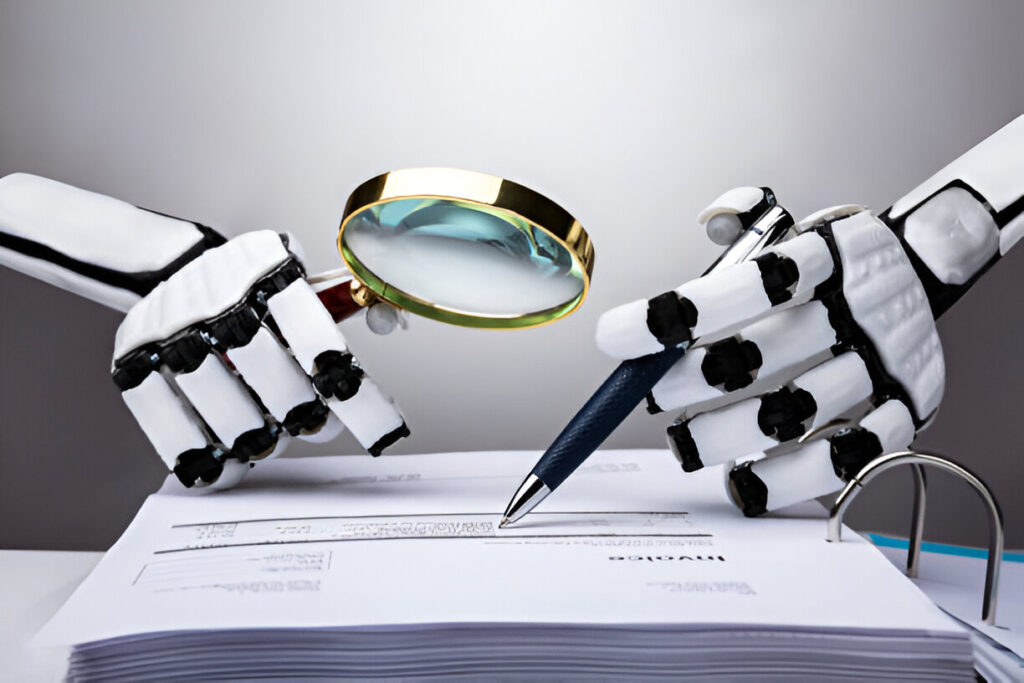

Let’s say you own a large factory or a trading business. Your business processes hundreds or even thousands of documents every day — invoices, purchase orders, delivery slips, customs documents, contracts, and so on. Each document has to be read, verified, keyed into a system, and then authorized. Now consider the time, money, and man-hours it takes to keep all this running.
That’s where AI document automation steps in. It is like having a super-intelligent assistant who never tires, never errs, and is faster than any human being. By automatically reading, processing, and structuring documents, AI is revolutionizing how businesses handle supply chains end-to-end.
In this post, let’s see how AI document automation is future-proofing supply chains, why this is important for any business, and how even verticals like AI in accounts payable are becoming game changers.
What Is AI Document Automation?
AI document automation refers to the utilization of artificial intelligence to read, comprehend, and process documents with minimal human intervention. Advanced solutions built for unstructured data extraction can capture information from messy, non-standard documents like contracts, shipping forms, or invoices, and convert it into structured data ready for analysis.
For instance:
- It can scan an invoice and extract information such as the name of the supplier, date, product description, and amount.
- It can verify whether an invoice is against a purchase order.
- It can automatically approve payment if all is well.
Previously, individuals had to go through these steps manually. But now, thanks to AI, it can be done in seconds with much greater accuracy.
Why the Supply Chain Relies on Documents
Supply chains are similar to a huge network of suppliers, manufacturers, warehouses, logistics firms, retailers, and customers. To keep the network operational, companies rely on documents like:
- Purchase orders – to order goods.
- Invoices – to pay suppliers.
- Bills of lading – to transport goods across borders.
- Delivery notes – to verify delivery of goods.
- Customs papers – for international trade.
Every document has critical information. If one paper is held up, completed inaccurately, or lost, the whole chain can be held up. Holdups translate into missed sales, increased expense, or dissatisfied customers.
This is why AI-powered document automation is increasingly valuable. It makes sure that information moves fast, accurately, and securely throughout every element of the supply chain.
The Role of AI in Accounts Payable
One of the earliest applications of AI document automation is in accounts payable — the function that pays suppliers.
Accounts payable has traditionally been loaded with manual processes. Staff members had to:
- Collect bills.
- Verify they correlate to purchase orders.
- Key them into systems.
- Approve or deny bills.
This used to take hours, sometimes days. Errors such as duplicate payments, incorrect entries, or missing bills were frequent.
With AI in accounts payable, you can:
- Captures invoices automatically.
- Verifies them against purchase orders.
- Alerts to fraud or duplicate invoices.
The outcome? Quicker payments, smiles from suppliers, and reduced processing fees. Businesses also receive real-time visibility into how much they owe, which allows them to better plan cash flow.
Key Ways AI Document Automation Affects the Supply Chain
Here’s the breakdown of the biggest effects of AI document automation throughout the supply chain:
1. Speed and Efficiency
AI works on documents much quicker than humans. What used to take hours, now takes a few minutes. For instance, processing 1,000 invoices may take weeks for a team but only a few hours for AI. This speed guarantees that supplies, shipments, and payments are never late.
2. Cost Savings
Manual document work costs companies a lot of money. They pay for salaries, overtime, training, and error correction. When they automate, they save millions annually.
3. Accuracy and Error Reduction
People fatigue and err — an incorrect number on an invoice or a forgotten signature. AI never gets it wrong once trained. This eliminates errors such as paying the wrong supplier or failing to meet a shipment deadline.
4. Visibility and Transparency
AI maintains a digital copy of all documents. It is simple to follow every transaction in the supply chain. For instance, a manager can easily identify where an order is delayed or which payments are waiting.
5. Fraud Detection
Fake invoices or counterfeit suppliers are significant threats in supply chains. AI can detect suspicious documents by verifying uncommon patterns, incorrect account numbers, or incongruent information.
6. Scalability
As a company expands, the volume of documents increases as well. With AI, it is simple to expand without having massive teams. Whether it is processing 100 documents or 10,000 documents, the AI system processes it at the same pace.
7. Sustainability
With digitization, businesses minimize paper usage, printing, and storage expenses. This is not only cost-cutting but also an environmentally friendly and green business practice.
Real-Life Examples
- Retail Chains: Big retailers have thousands of suppliers. With AI document automation, they can accelerate invoice approvals and keep shelves stocked on time.
- Logistics Companies: Shipping papers, customs declarations, and delivery receipts can be processed in an instant, eliminating border delays.
- Manufacturers: AI assists them in monitoring raw material arrivals and finished product departures, facilitating smooth production.
The Future of Supply Chains with AI
AI is not merely about the automation of work. It is about intelligent supply chains. We can look forward to the following in the future:
- Predictive Insights: AI will scan documents and anticipate issues, such as a supplier who may lag on delivery.
- Self-learning Systems: AI will improve with time by learning from previous documents.
- End-to-End Automation: From the purchase order to the delivery, the whole chain will operate with minimal human intervention.
This future is one where supply chains are faster, safer, and more reliable than they have ever been.
Challenges Companies Will Face
- Adopting AI document automation, of course, is not challenge-free:
- Some workers worry about losing their jobs.
- Outdated systems might not coexist easily with new AI applications.
- Businesses must invest in training and change management.
But the advantages are so compelling that automation is a necessity for most businesses rather than an option.
Why Every Business Needs to Take Notice
Even if your business isn’t a behemoth like Amazon or Walmart, AI document automation can make a difference. Smaller companies tend to suffer more from delays, mistakes, or excessive expenses. With AI, they can match the bigger players and expand at a faster rate.
Consider it in these terms: if your competitor is paying their suppliers faster, expediting orders more quickly, and monitoring shipments more closely, they will gain customer trust before you ever get a chance. AI puts everyone on the same level.
Final Thoughts
The supply chain is the lifeblood of any enterprise. And documents are the lifeblood of that lifeblood. Without proper document flow, the chain collapses.
AI document automation is revolutionizing this backbone, making processes quicker, smarter, and more dependable. From AI accounts payable to fraud detection and supply chain visibility, the advantages are huge.
Those companies that implement AI today will be leaders tomorrow. Those who hold back will be bogged down with slowness, expense, and irate customers.
Ultimately, AI document automation is not purely a matter of technology. It’s about creating supply chains that are growth-driven, customer-friendly, and future-ready.