
Divorce is one of life’s most challenging transitions. Beyond the emotional weight, it often comes with many questions: How does the process work? What steps do you need to take? And what can you expect along the way? Understanding these answers can help alleviate some of the stress and enable you to move forward with confidence.
Whether you’re navigating this change yourself or supporting someone you love, knowing the key legal steps and practical expectations makes the road ahead a little less daunting.
The Basics: What Divorce Means
At its core, divorce is the legal end of a marriage. It doesn’t automatically resolve every aspect of a couple’s shared life, but it provides a framework to start separating lives in a clear and lawful way.
For example, while a divorce order finalizes the marriage itself, it doesn’t immediately decide on parenting arrangements or property division. Think of it like ending a business partnership: you may dissolve the agreement, but you still have to fairly allocate the company’s assets and responsibilities. The same principle applies here—divorce sets the stage for those next steps.
One of the most important requirements in Australia is proving that the marriage has irretrievably broken down. Typically, this means living separately for at least 12 months, even if it occurs under the same roof. It’s a safeguard that ensures couples have had time to consider reconciliation before moving forward.
Step One: Applying for Divorce
The first major step is filing an application. There are two main ways this can happen:
- Joint application: Both parties agree that the marriage is over and submit their application together.
- Sole application: One person applies, and the other is served with papers.
In real life, this can manifest differently depending on the circumstances. For example, a couple who have mutually decided to move on might file jointly, much like two business partners agreeing to close a company. On the other hand, if one partner feels the separation is necessary while the other does not, a sole application is the route forward.
The application process is now largely digital, making it more accessible. However, it can still feel overwhelming if you’re already under stress, so having guidance along the way is invaluable.
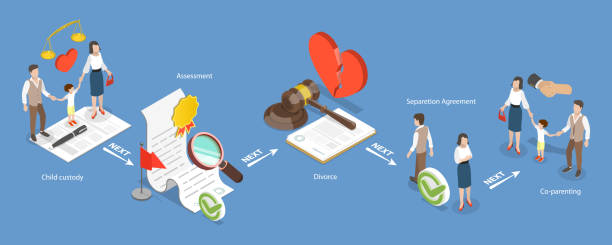
Step Two: Considering Children and Property
Once the divorce application is underway, the next focus is typically on practical matters, including children, property, and finances.
- Parenting arrangements: Courts prioritize the best interests of the children. This includes who the children live with, how much time they spend with each parent, and how major decisions (like schooling or healthcare) are made. It’s similar to co-managing a project—you need clarity on roles, responsibilities, and outcomes.
- Property settlement involves dividing assets, such as the family home, investments, vehicles, or even superannuation. Much like unwinding a joint venture, both contributions (financial and non-financial) are considered before a fair division is made.
- Spousal maintenance: In some cases, one spouse may provide financial support to the other after the couple separates. This depends on each person’s ability to support themselves and their financial circumstances.
These matters can be resolved by agreement outside of court through negotiation or mediation, saving time, money, and emotional strain.
Step Three: The Court Hearing
If everything is straightforward, divorce hearings are often brief and may not require both parties to attend. However, in situations involving children under 18, the court takes an extra step to ensure arrangements are in the child’s best interests.
Think of the court as a referee in a sports game—it doesn’t play the match, but steps in to ensure the rules are followed and the outcome is fair. This safeguard provides reassurance that decisions aren’t only made quickly but also made responsibly.
What to Expect Along the Way
Divorce is rarely a straight path. Expect moments of frustration, relief, and uncertainty. However, knowing what lies ahead helps reduce the element of surprise.
- Timelines: From the application date, it typically takes a few months for the divorce to be finalized.
- Costs: There are filing fees, but concessions may be available depending on the circumstances.
- Emotions: Even if the separation is amicable, it’s normal to feel grief, stress, or anxiety. Just as companies hire consultants during major changes, seeking support from professionals, friends, or counselors can make all the difference.
Finding Guidance When You Need It
No one expects to go through a divorce alone, and expert guidance can make the process less overwhelming. If you’re unsure about paperwork, court requirements, or how to divide property fairly, having trusted help is invaluable.
For individuals seeking tailored advice, resources like Jameson Law Divorce Specialists offer clarity, support, and the reassurance that your rights and interests are being carefully considered and protected.
At the same time, you may also find it useful to explore broader concepts, such as family law, which outlines the principles courts use to make decisions regarding divorce, children, and property.
Final Thoughts
Divorce is more than a legal process—it’s a deeply human experience. While the steps can seem formal and procedural, they ultimately serve to help people move into the next chapter of their lives with structure and fairness.
By understanding the legal steps—application, parenting, and property considerations, as well as court involvement—you’re better equipped to navigate the process. And by leaning on the right support, both personal and professional, you can move through it with resilience and clarity.
Every ending makes space for a new beginning. Divorce is never easy, but with the right knowledge and guidance, it can be the first step toward rebuilding a stronger, more hopeful future.