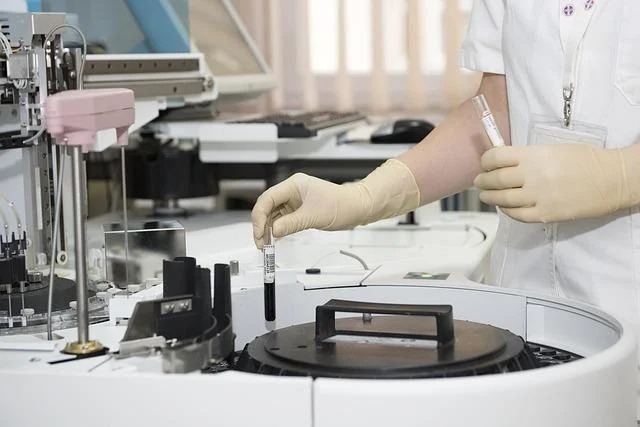

Here’s a look at 7 breakthrough imaging technologies that are making major strides in changing the future of medical research.
Imaging technologies are extremely relevant to the modern medical research landscape. With the rising technological infrastructure, medical imaging systems have changed over time, and they have completely redefined medical research. This post will explore 7 such imaging technologies that will define the future of research in the medical landscape.
Innovative Imaging Technologies in Medical Research
In the field of medical research, innovative imaging technologies have led to significant accelerations in terms of disease detection, enabling personalizations in treatments as well as aiding the creation of new tools for analysis and education.
In this context, advanced technologies, such as AI-powered analysis, hybrid imaging, and wearable monitoring devices, have led to increased precision, speed, and insight into disease mechanisms. Therefore, technology has allowed researchers to gain a deeper understanding and elevate the effectiveness of interventions.
On that basis, let’s look into some of the innovative imaging technologies that have brought major changes into the imaging landscape in medical research:
1: Functional Ultrasound (fUS) for Brain Imaging
Functional ultrasound, or fUS, is a type of focused ultrasound, or a neuroimaging technique that uses ultrafast ultrasound systems to measure changes in the volume of cerebral blood, which is an indirect measure of neural activity. It offers high spatial and temporal resolution, which allows researchers to map brain activity.
This can be effective in both preclinical and human studies. Such an imaging method is considered extremely suitable because it is portable, non-invasive, and often can be used in clinical settings, even during surgery.
2: Photoacoustic Imaging
Photoacoustic or PA imaging can be referred to as a hybrid biomedical imaging technique that uses laser light to create images with both the high contrast of optical imaging and the high resolution of ultrasound imaging.
So, how does it work? It works by illuminating tissue with laser pulses, which are then absorbed by molecules called chromophores that heat up and expand. This expansion then creates an ultrasound wave detected by a transducer, allowing deep structure imaging and providing functional information.
3: AI-Powered Image Analysis
AI-powered image analysis uses artificial intelligence and computer vision to interpret visual data and enables computers to understand and extract information from visual inputs. This, in medical research, helps accelerate diagnosis, improves accuracy, and also enables personalized medicine by using algorithms.
These algorithms can help detect patterns, segment structures, and quantify abnormalities in X-rays, CT scans, or even MRIs. This technology is effective in identifying early-stage diseases, allows for precise treatment planning, and also helps create comprehensive patient profiles.
4: Advanced Shear Wave Elastography
Advanced shear wave elastography (SWE) is a non-invasive shear wave research system that measures tissue stiffness to provide diagnostic information. This advanced version improves on the general SWE with the help of sophisticated transducers as well as software technology that offer more accurate and reliable measurements.
This shear wave research system is used in the assessment of diseases in organs such as the liver, breast, prostate, and musculoskeletal system. It can also be extremely suitable for the prediction of prognosis and the patient’s response to treatment.
5: High-Frequency Super-Resolution Ultrasound
The high-frequency super-resolution (SRUS) is defined as an advanced imaging technique combining high-frequency focused ultrasound with methods that surpass the traditional diffraction limit, achieving micron-scale resolution for imaging fine microvasculature.
How does this system help? It tracks and localizes ultrasound microbubbles and reconstructs images with great detail, such as the visualization of blood vessels and blood flow at the micro level. Thus, this system helps clinical applications in areas such as neurology and oncology.
6: Molecular Imaging with Contrast Agents
Molecular imaging with contrast agents uses specialized probes that visualize biological processes at a cellular and subcellular level in living organisms. These agents are targeted to specific molecules or pathways. And they are detected by different imaging techniques, such as PET, SPECT, MRI, and ultrasound.
So, how does it work? The contrast agent is designed with a targeting molecule, which binds to a specific marker or a cell or even in a tissue, allowing some areas to appear contrasting during the application of imaging techniques.
7: Portable and Point-of-Care Ultrasound (POCUS)
Portable and point-of-care (POCUS) ultrasound is a type of focused ultrasound where a small and mobile ultrasound device is used by a clinician, bringing diagnostic imaging to the patient. They are also especially valuable in emergency rooms, rural clinics, or even during transport, where the traditional ultrasound suites are not easily accessible.
This imaging system is useful in emergencies, such as during a quick cardiac arrest check or for assessing conditions such as a collapsed lung. However, its biggest usage is still providing capabilities without nearby radiologists.
Summing Up
Emerging technologies in healthcare have completely changed the landscape of medical research. So, based on these technological advancements in health research have led to systems such as Photoacoustic Imaging, AI-Powered Image Analysis, fUS, POCUS, and so on. And these technologies converge to lead to the future of healthcare research.
Leading Imaging Innovations in Healthcare Research? Here’s What to Know
This post has explored some of the top imaging innovations in healthcare research that have the capability to take this industry into the future. However, this barely scratches the surface. So, if you want to learn more, medical journals, articles, blogs, and the internet itself are your friends!