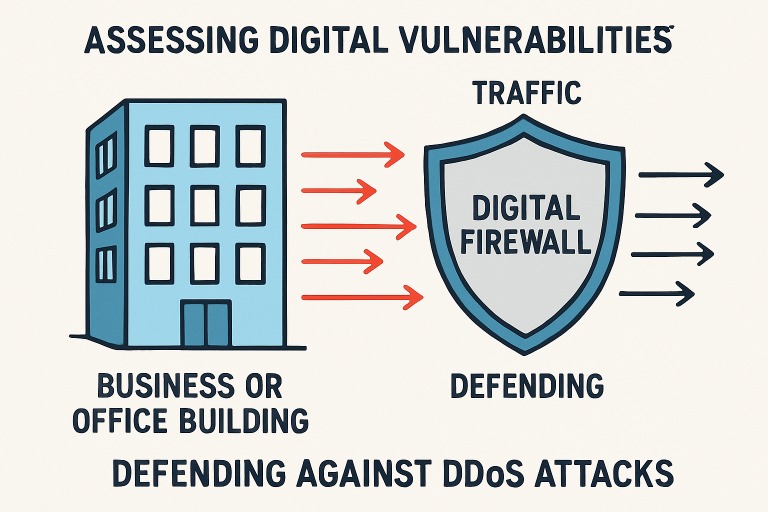

Understanding DDoS Attacks
Distributed Denial-of-Service (DDoS) attacks continue to pose a persistent threat to businesses of all sizes. By flooding networks, services, or servers with excessive traffic, cybercriminals aim to disrupt digital resources and render them inaccessible to legitimate users. As online operations become mission-critical for nearly every industry, organizations must confront the reality that DDoS attacks can cause extensive downtime, disrupt operations, inflict financial harm, and damage brand reputation. For most small and medium-sized businesses, which threat actors increasingly target, the need for a comprehensive DDoS protection service is more pressing than ever.
Understanding the risks and motivations behind attacks, as well as the likely targets, helps businesses anticipate the scope of potential damage. In the evolving threat landscape, recognizing the difference between volumetric, protocol, and application-layer attacks offers essential insight when crafting a customized defense strategy.
Assessing Your Vulnerability
Before adopting any defensive measures, conduct a thorough assessment of your organization’s exposure to DDoS threats. This process should begin by identifying all critical digital assets—such as websites, customer portals, APIs, and backend systems—and analyzing their reliance on uninterrupted online availability. Vulnerability assessments should include not only technological weak points but also procedural gaps, the availability of emergency contacts, and the readiness of your incident response teams.
Businesses that understand their own infrastructure can quickly pinpoint the systems most in need of protection and prioritize resources for the greatest impact. External security audits or penetration testing from reputable organizations can help validate internal findings and uncover exposure that might otherwise remain hidden.
Implementing Robust Mitigation Strategies
DDoS Protection Tools and Services
Working with your Internet service provider or specialized security vendors is a practical first step toward fortifying your defenses. Modern DDoS mitigation tools integrate traffic analysis, advanced filtering, and real-time response to block malicious traffic. Managed security service providers are especially valuable for organizations lacking internal expertise.
Integrating Content Delivery Networks
Leveraging Content Delivery Networks (CDNs) spreads incoming traffic across servers in multiple geographic locations. This decentralization not only enhances performance for legitimate users but also absorbs or disperses huge volumes of malicious requests, reducing the danger posed by smaller DDoS incidents.
Layered Technical Controls
Implement technical safeguards, such as rate limiting and request filtering, at both the network and application layers. Controlling the number of requests from an individual IP address within a defined window blocks ‘slow and low’ application-layer attacks and reduces the risk of resource exhaustion. These controls should be maintained and tuned regularly based on observed traffic behaviors.
Developing an Incident Response Plan
Even best-in-class defenses cannot guarantee complete immunity from all attacks. That’s why a well-practiced incident response plan is essential for minimizing the impact of a successful attack. Assign clear roles and responsibilities, outlining exactly who takes charge during a DDoS event. Establish and rehearse your communication strategy for customers, partners, and stakeholders to preserve transparency and maintain trust during a disruption. Regular simulation drills—ranging from tabletop exercises to full-scale technical rehearsals—enable teams to identify and eliminate gaps in their procedures.
Documentation of lessons learned after drills and actual incidents enables response plans to evolve, ensuring they stay current with the latest tactics and attack methods observed in the field.
Leveraging Cloud-Based Solutions
Cloud-based DDoS protection solutions have transformed the defensive landscape for businesses seeking high availability and rapid scalability. These solutions are designed to absorb attacks of virtually any size by rerouting malicious requests away from your core infrastructure to globally distributed data centers. By handling attacks remotely, cloud DDoS services help ensure business continuity even during massive distributed denial-of-service (DDoS) attacks.
Adopting cloud-based protection also reduces maintenance for internal teams and offers cost flexibility by charging only for resources consumed during attack events. For businesses with distributed or hybrid environments, cloud solutions can be seamless and highly effective.
Monitoring and Continuous Improvement
Early detection is often the difference between an attack that is quickly mitigated and one that spirals into a major outage. Leverage real-time traffic monitoring to spot abnormal patterns: sudden surges, increased pings from unfamiliar geographies, or a spike in requests to underused endpoints. Deploy threat intelligence feeds and anomaly detection tools to bolster situational awareness. Continuously audit your network to stay ahead of new vulnerabilities and routinely patch or update mission-critical systems. Continuous improvement should be an ethos: iterate on your strategies based on post-incident reviews and emerging best practices.
Training and Awareness
Technology alone cannot shield an organization from DDoS threats. Human error and lack of awareness can leave even the best-protected systems vulnerable. Implement a robust cybersecurity training program that informs all staff and system users about the risks and signs of DDoS attacks. Teach team members how to report unusual activity and walk through incident communication protocols. This ongoing education ensures every employee becomes a part of your first line of defense.
Final Thoughts
As our reliance on online platforms intensifies, businesses must realize that facing a DDoS attack is a matter of when, not if. Preparation, layered defenses, cloud-powered scalability, and employee vigilance form the foundation of a robust response plan. Regularly revisiting and strengthening each component of your plan is crucial to ensuring operational continuity, protecting revenue, and maintaining the trust of your customers and partners in today’s rapidly evolving threat landscape.