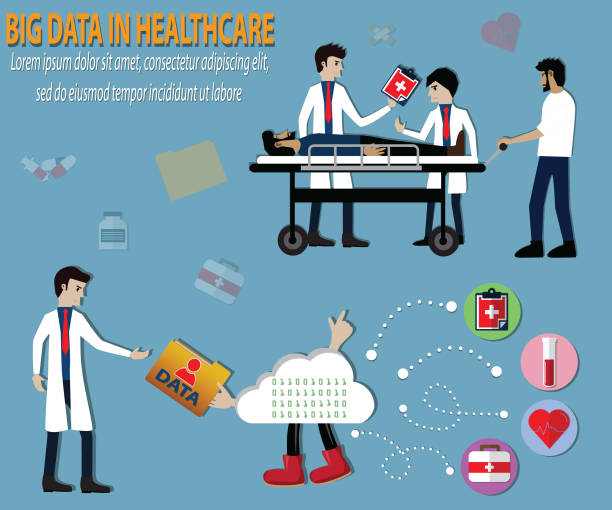

In the modern era of healthcare and life sciences, one of the biggest challenges is not the collection of data, but turning that data into meaningful, usable insights. NashBio (officially Nashville Biosciences) is one of the leading players tackling this problem. By combining real-world clinical data, genomic information, imaging, and more, NashBio is helping researchers, biotech companies, and pharmaceutical developers accelerate discoveries—and ultimately bring new diagnostics and therapeutics to patients faster.
Origins & Mission
NashBio is a wholly owned subsidiary of Vanderbilt University Medical Center (VUMC) and was founded to bridge a key gap: making “complex healthcare data easy to use.
VUMC has long collected extensive data from its health system—clinical encounters, electronic medical records, and residual biological samples (e.g. blood samples after standard tests). NashBio’s role is to take those assets (already de-identified) and package them into usable, well curated, deeply linked datasets that external parties (biotech, pharma, diagnostics, academic researchers) can utilize.
Their approach is not “spray and pray” (dumping raw data), but rather tailored and context-aware. NashBio works with clients to define what they need, and then builds a multi-modal dataset that aligns with that use case—clinical data, genomic, imaging, waveforms, etc.
What Makes NashBio Stand Out
Several features distinguish NashBio from more generic data providers:
1. Deeply Integrated, Multimodal Data
Many data platforms focus solely on clinical records or only genomic data. NashBio unifies diverse modes of data: structured EHR data, unstructured clinical notes, imaging, waveform signals (like ECG/EEG), and linked “omics” (genomic, proteomic, etc.). This breadth allows deeper insights—seeing not just the “what” (diagnosis) but the “how” (molecular correlates, progression over time).
2. Longitudinal & Curated
The data is not a static snapshot. NashBio provides longitudinal views—how patients change over time, how therapies perform, disease progression, etc. Moreover, NashBio invests in curation, normalization, and de-identification to make data research-ready.
3. Rich Biobank Linkage (BioVU®)
One of the powerful assets NashBio inherits via Vanderbilt is BioVU®, a biorepository of de-identified DNA samples that are linked to clinical records. Leftover blood from routine patient care is retained (with patient consent), de-identified, and matched to health records—creating a powerful genotype + phenotype dataset.Through BioVU®, NashBio can support genomic, exome, whole genome sequencing, and other omics analyses.
4. Privacy & Ethical Design
NashBio handles de-identification with care. Clinical data used comes from the Synthetic Derivative (SD) of VUMC’s EMR, a de-identified version with strict privacy safeguards. The process includes removing all 18 HIPAA identifiers, shifting dates randomly (while preserving relative time relationships), hashing identifiers, etc. The DNA and biosample data are also de-identified and cannot be traced back to individual patients. Because of this, ethical review boards often designate the use of these resources as non–human subject research, simplifying regulatory burden.
5. Flexible Access & Self-Service Platform (TOTUM)
Originally, NashBio operated largely as a service-first model—clients would bring questions, and NashBio would build custom datasets + analysis pipelines. But now, they are shifting more toward a technology-first model. Their upcoming research platform (called TOTUM) will allow self-service access to de-identified datasets, cohort creation, analysis, etc. This empowers more users to interact directly with the data without full reliance on service teams.
Key Milestones & Recent Innovations
- NashBio was founded in 2018, building on Vanderbilt’s earlier initiatives in data and biobanking.
- In 2023, NashBio launched the Alliance for Genomic Discovery (AGD)—a collaboration with Illumina and several pharma partners. The AGD worked on sequencing ~250,000 genomes, expanding the scale and utility of its genomic data resource.
- In early 2025, NashBio announced a suite of next-gen real-world data solutions including therapeutic-area curated datasets and a cloud-based research platform.
- They have strategically moved into the data-as-a-service space (DaaS), offering scalable, subscription-based access to de-identified EHR + genomic data.
These developments aim to reduce friction in data access for life sciences teams, enabling faster discovery, better biomarker identification, and more equitable patient representation in studies.
Use Cases & Impact
NashBio’s datasets and capabilities enable a range of valuable applications:
- Drug target discovery: Researchers can probe genotype-phenotype correlations and discover molecular pathways or genes associated with diseases.
- Biomarker validation: By linking clinical outcomes to molecular data, new biomarkers (genetic or otherwise) can be tested and validated.
- Synthetic control arms: In trials where a control arm is expensive or unethical, real-world data cohorts from NashBio can act as a control comparison.
- Patient stratification & precision medicine: By integrating clinical + genomic + imaging data, more nuanced patient subpopulations can be defined for targeted therapies.
- Health economics & outcomes research (HEOR): Observing how therapies perform post-approval, across populations, in the real world.
- Disease progression modeling: Longitudinal data enables estimation of disease trajectories, predicting risk, forecasting outcomes.
These capabilities can shorten development timelines for new treatments, help avoid failure in late-stage trials, and improve translation of discoveries into practice.
Challenges & Considerations
While NashBio is doing impressive work, this field is not without challenges:
- Data heterogeneity & quality
Even though the data is curated, integrating very different data types (text, imaging, waveform, omics) is non-trivial. Ensuring consistency, resolving missingness, harmonizing across sources—all require ongoing effort. - Regulatory & privacy constraints
De-identification is critical, but maintaining patient privacy while maximizing utility is a continual balancing act. Methods such as date-shifting, hashing, and removal of identifiers help, but there’s always a trade-off in re-identification risk vs. analytic flexibility. - Biases & representativeness
Because much of their data originates from one health system (Vanderbilt and affiliated clinics), there is risk of population bias — certain demographics or regions might be underrepresented. This can limit generalizability if not carefully accounted for. - Scalability and computational demands
Enabling real-time, self-service access to very large, multimodal datasets (many terabytes or petabytes) requires robust infrastructure, indexing, and query optimization. - Interpretability & cross-disciplinary needs
Many clients may not have deep expertise in bioinformatics, machine learning, or data engineering. Translating insights into actionable research requires domain support.
Future Outlook & Opportunities
- Expanded “omics” modalities: Beyond just genomics, NashBio is likely to expand into transcriptomics, proteomics, metabolomics, epigenomics, etc., to provide more molecular layers.
- Platform democratization: With TOTUM and similar tools, more users (academic, mid-sized biotech) will gain access to high-quality data without needing big budgets.
- Global collaborations & data diversity: To reduce bias, NashBio may form partnerships with institutions across regions, increasing ancestral & ethnic diversity in datasets.
- AI / ML integration: As datasets grow richer, more machine learning models (predictive, generative, “digital twins”) will be developed using NashBio’s infrastructure.
- Precision medicine breakthrough facilitation: By making data easier to use, NashBio is well positioned to be a backbone in enabling the next wave of personalized diagnostics, therapeutics, and biomarker-driven medicine.
- Regulatory alignment & standards leadership: As real-world data becomes more recognized by regulatory bodies (FDA, EMA, etc.), NashBio has the potential to help set standards for how RWD + genomics data are used for submissions.
Conclusion
In summary, NashBio is a sophisticated and strategically positioned company at the intersection of real-world clinical data, genomics, and life sciences research. By transforming raw data into ready-to-use, deeply linked resources, NashBio is helping organizations accelerate research, reduce friction, and push the frontier of precision medicine.
For anyone in biotech, pharma, academic research, or health tech, NashBio is a name to watch. As they continue to scale, expand, and democratize access to rich multimodal datasets, they could become central to the next generation of breakthroughs in human health.