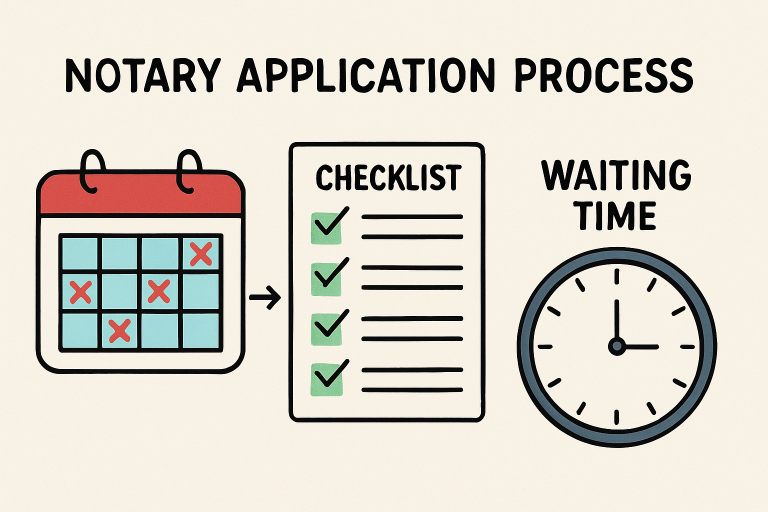

Becoming a notary public is a practical and respected step for individuals in many professions. One of the most common questions for new applicants is how long the process will take from the time the application is submitted to the time the commission reviews it. While the notary process is generally straightforward, timelines can vary significantly depending on your state and specific circumstances. For example, if you’re starting the notary application Florida, you’ll want to know how your processing time compares to other regions. Thorough preparation helps prevent delays and sets accurate expectations for when you can begin official notary work.
Processing times aren’t only determined by state offices; background checks, mandatory educational requirements, and exam schedules can all play a role. Timely submission and preparation are essential to avoid unnecessary setbacks—especially in states where demand for notary commissions is high. With an understanding of your local requirements, you can navigate the application process seamlessly and minimize unexpected waiting periods.
It’s important to review your state’s notary website regularly, as policies and volumes can shift throughout the year. Addressing all mandatory requirements and double-checking your application for errors up front will also help you avoid problems. Consider seeking assistance or utilizing services certified by your state if you’re unsure about paperwork or background details.
Whether applying at the local or state level, leveraging online resources and following up on your application status are keys to ensuring everything proceeds smoothly. New applicants in states with digital processing systems may experience shorter turnaround times, especially when all required documentation is ready from the start. Staying organized and keeping an eye on official notices will keep you ahead in the process.
State-Specific Processing Times
State laws and administrative procedures have a direct impact on how quickly your notary commission is processed. For example, California currently processes applications for exams taken as of September 16, 2025, with an average turnaround time of approximately 8 weeks, according to the Secretary of State’s office. California applicants must plan well ahead and remain patient during this waiting period, especially when demand is high.
Conversely, in Texas, advances in digital administration have reduced wait times. As of January 2025, the entire process has transitioned to electronic, resulting in average processing times of between 3 and 6 weeks. This efficiency is particularly beneficial for applicants needing to start their notary services quickly.
Michigan offers both online and mail-in options, illustrating how different application channels can impact timing. Online applicants in Michigan may receive commission approval the very same day, while those applying by mail may wait up to six weeks. Reviewing both options may help you choose the best option based on your personal time constraints.
Other states, such as Florida and New York, often require applicants to factor in additional county-level or exam-related delays, which makes it essential to review all state-specific and local guidelines before applying. Understanding state-by-state variations is crucial for planning, especially when relocating or applying for multiple commissions.
Factors Influencing Processing Durations
Several key elements influence the timeline for your notary application. The most significant include:
- Background Checks: All notary applicants undergo background investigations. Complex or unclear results can extend processing time, especially if additional information is required or if criminal records need to be reviewed.
- Mandatory Education and Examinations: States such as California and New York require completion of approved notary training and passing a written test. Scheduling and passing these exams can add days or weeks to your timeline.
- Application Volume: State offices sometimes face a surge in applications—often after legislative changes or during specific times of the year—leading to batch processing and longer turnaround times.
- Submission Errors: Application mistakes, incorrect forms, or missing documents frequently result in delays. Applicants must pay close attention to detail and ensure every step is completed correctly.
Additionally, if any documentation requires notarization before submission, this can also extend the processing time, particularly in counties with limited staff or resources.
Tips for a Smooth Application Process
Planning can significantly reduce the risk of setbacks in your notary application journey. To ensure a seamless process:
- Complete All Requirements Promptly: Enroll in mandated courses and pass the required exams at the earliest opportunity. Many states provide applicant checklists—follow these closely to avoid omissions.
- Submit Accurate Information: Always double-check your application for typos, mismatched names, or other inconsistencies. This step alone can prevent major avoidable delays.
- Stay Informed: Monitor your state’s official notary web portal for the latest status reports and notifications of changes to the process or requirements.
- Document and Track Your Application: Many states offer confirmation numbers or tracking systems to help you keep track of your application. Save all correspondence and document receipts to prove submission if questioned.
- Seek Guidance When Needed: Utilize guides and FAQs from reputable organizations, such as the National Notary Association, for clarification on complex requirements or updates.
Ultimately, maintaining organization and awareness will ensure you move through the application process as efficiently as possible. A proactive approach can mean the difference between a smooth, timely commission and extended, frustrating delays.
By understanding your state’s unique timeline and administrative process, and by taking practical steps to avoid common pitfalls, you can set realistic expectations—and begin your notary public work with confidence and preparation.
Conclusion
Understanding the timeline for notary application processing helps you set realistic expectations and plan effectively for your new role. While the process can vary by state, ranging from a few weeks to several months, being proactive with your paperwork, background checks, and required training can significantly reduce delays. Staying informed about your state’s specific requirements and monitoring your application status ensures a smooth path toward commissioning.
By preparing thoroughly and remaining patient during the approval period, you’ll be well-positioned to start your duties confidently and efficiently. Ultimately, a clear grasp of the notary application timeline not only saves time and frustration but also lays the groundwork for a successful and compliant notary career.